


 About us
 Payment & Shipping
 News
News
 Cooperation
 Contacts
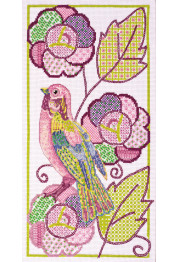
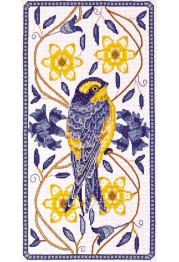
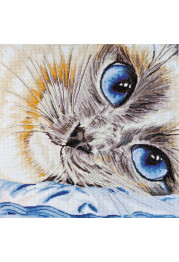
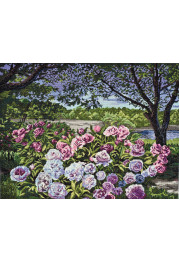


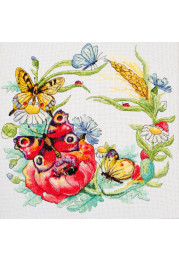
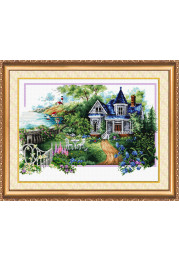
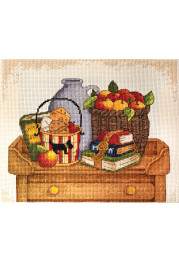
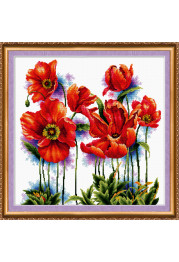
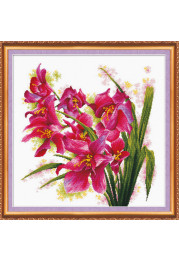
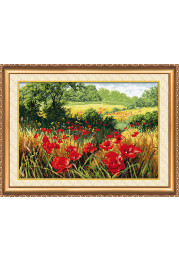
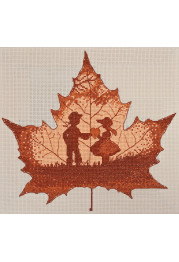
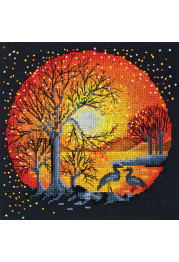
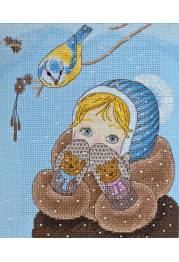
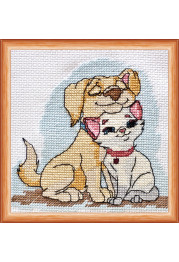
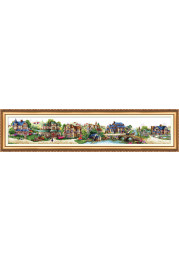
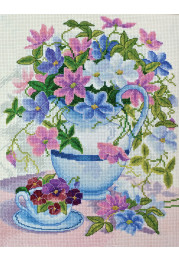

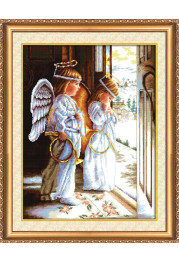
Big size cross stitch kits are pieces from 200×200 mm upwards, with a wide palette and a full composition. The section holds 332 kits: Aida with finished edges, DMC floss with a surplus, a printed colour chart and a QR code to the digital formats.
What makes the large format different
It is not the area but the number of colours. Large designs use 26–39 shades against 10–16 in miniatures. Colours drive both the difficulty and the time spent checking the chart.
| Colours | What it means in practice |
|---|---|
| up to 20 | All the floss fits one organiser; little chance of mixing shades up |
| 20–30 | Labelled DMC numbers are needed; several shades will look very close |
| over 30 | Fine gradients: you check the chart every few rows |
Fabric
288 kits are on 14 count and 44 on 18 count. Eighteen count gives a crisper image over the same area, but the stitch is smaller and the eyes tire faster, so 14 count is the practical choice for a first large piece.
Difficulty and time
170 kits are rated medium, 59 easy, 53 above medium and 50 advanced. A 300×300 mm design on 14 count works out at roughly 80–150 hours depending on coverage and colour count.
Subjects
Animals and birds (56), decorative designs (52), flowers (46), landscapes (35), winter (28), insects (17), romantic subjects (15) and still life (15).
Questions and answers
How long does a large cross stitch piece take?
From 60 to 150 hours. As a guide, an experienced stitcher makes 150–250 stitches an hour, a beginner 80–120.
What hoop do I need for a large format?
A 20–25 cm round hoop or a frame. Move the hoop so it does not sit on already stitched areas for long: ring marks have to be steamed out afterwards.
Will there be enough floss?
Yes, DMC floss is supplied with a surplus for full coverage. The numbers are on the chart.
How do I wash and finish the piece?
Hand wash in warm water, dry flat, press from the back through a cloth. Then stretch it on bars or frame it under glass: stretching on bars.