
 About us
 Payment & Shipping
 News
News
 Cooperation
 Contacts
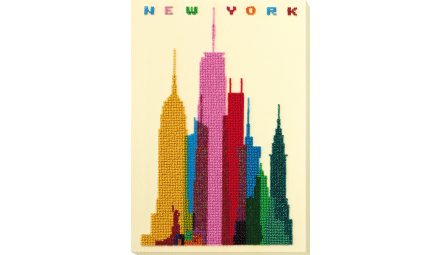
The specifications say "Czech Preciosa beads, size 10", and that single line tells you more than it seems: the size of the bead, the density of the future piece, even the rough number of hours. Here is what the number means, what sizes exist, and why calibration matters more than colour.
What the bead number means
The number is not a diameter but an old measure of how densely beads string. Historically it showed how many beads of that size fit into one inch (25.4 mm) when strung tightly together. The logic is therefore inverted: the bigger the number, the smaller the bead. Size 6 is large, size 10 is medium, size 13 is a microbead.
The number is written in several ways: "No. 10", "10/0" or "10°". They all mean the same thing. The fraction with a zero is another legacy of the old system, where zero marked the base size everything was counted from.
It is worth understanding that the number describes the outer size, not the hole. Two beads of the same number from different makers can have noticeably different holes, which is why a needle is matched to the specific bead rather than to "size 10 in general".
Size table
| Size | Diameter, mm | Beads per 1 cm of row | Approx. per 1 cm² | Where it is used |
|---|---|---|---|---|
| No. 6 | about 4.0 | 2–3 | 6–7 | Large decor, trims, children's projects |
| No. 8 | about 3.0 | 3–4 | 10–12 | Accents, raised elements, loom work |
| No. 10 | about 2.3 | 4–5 | 17–19 | Embroidery on art canvas, the most common size |
| No. 11 | about 2.1 | about 5 | 21–24 | Embroidery, loom work, beaded ropes |
| No. 13 | 1.6–1.7 | 6 | 32–36 | Microbeads: jewellery, miniatures, fine detail |
| No. 15 | about 1.5 | 6–7 | 40–45 | The finest detail, restoration, jewellery work |
The figures in the "per 1 cm²" column are calculated for dense coverage in monastery stitch. In a real piece the number comes out slightly lower because of tension and because rows never meet perfectly. Still, it is enough for estimating volume: a 20×25 cm piece fully covered in size 10 is around 9,000 beads.
Microbeads, size 13: a different job
The difference between size 10 and size 13 looks small — under a millimetre. In practice it is another kind of work altogether. Over the same area microbeads take twice as many beads as size 10, and roughly twice the time at the same pace measured in beads per hour.
What you get in return is a level of detail large beads cannot reach: smooth colour transitions, thin lines, small faces. That is why microbeads are used for jewellery, brooches, miniatures and small magnets — wherever a full image has to fit into a few centimetres. Such designs are gathered in the microbead embroidery section.
Microbeads need their own needle — an ordinary beading needle of size 11–12 simply will not pass through a size 13 hole. Kits with microbeads include the needle; separately they are found among the needles for bead and thread embroidery.
Calibration is what you are paying for
Calibration means the beads in one packet are identical in diameter and height. It sounds trivial until you try stitching a row with uncalibrated beads: one bead stands a quarter of a millimetre higher than its neighbour, the row wanders, and across a palm-sized area it reads as ripples.
What calibrated beads give you in practice:
- Even rows. There is no need to sort beads and set aside the odd ones — with uncalibrated beads the rejects can reach a quarter of the packet.
- Predictable consumption. The number of beads per gram is constant, so a kit's calculation adds up.
- Consistent holes. Needle and thread pass without catching, and the thread does not abrade at narrow points.
- Repeatable shade. Batches of the same colour number match, so a top-up does not read as a patch.
Why Preciosa
Preciosa is a Czech glassmaker from Jablonec nad Nisou, a region with a century-old glass tradition. Abris Art bead embroidery kits on art canvas use Czech Preciosa beads, and the reasons are entirely practical.
- Stable size. Machine calibration produces a uniform bead, so a chart calculated for a given count matches reality.
- Durable finish. The colours hold up under light and against thread friction — critical for a piece that will hang on a wall for years.
- A wide palette with close shades. Gradients need genuinely adjacent shades within one numbering system, not simply "many colours".
- Availability for top-ups. A Preciosa colour number is a production designation, so the same shade can be bought again a year later.
The Preciosa bead shape is a slightly flattened doughnut, a little wider than it is tall. In monastery stitch that shape packs more tightly and gives a more even surface than a cylindrical bead of the same size.
Grams and pieces
In kits beads are counted in pieces, but when you buy them separately they are sold by weight. A rough conversion:
| Size | Beads per 1 g | Grams per 10×10 cm of full coverage |
|---|---|---|
| No. 10 | 95–110 | about 17 g |
| No. 11 | 110–130 | about 18 g |
| No. 13 | 270–330 | about 12 g |
The figures are approximate: weight depends on the type of finish, and transparent and matte beads of the same size differ by a few per cent.
Frequently asked questions
What bead size is used in Abris Art kits?
Bead embroidery kits on art canvas use Czech Preciosa beads. Kits with microbeads — jewellery, brooches, magnet pennants — use Preciosa size 13. If the exact size matters to you, because you are planning a top-up for instance, check it against the description of the particular kit in the kit catalogue.
Does a bigger number mean a bigger bead?
The opposite: the bigger the number, the smaller the bead. Size 6 is about 4 mm, size 10 about 2.3 mm, size 13 about 1.6–1.7 mm. The reason is that the number historically counted beads per inch of strung thread, not the diameter.
Which needle goes with which bead size?
For size 10 beads use a beading needle of size 11–12, for size 11 beads a size 12 needle, and for size 13 microbeads a needle of size 13–15. The rule is simple: needle and thread must pass through the hole freely, because every bead on the piece is threaded at least twice.
Why do beads of the same colour differ slightly between packets?
They come from different glass melts. With calibrated beads the difference is minimal, but on a large plain background the eye catches it. So stitch a background from a single packet where you can, and if you must mix, blend the contents of both packets in advance so the transition dissolves.
How many beads fit into a square centimetre?
With dense coverage in monastery stitch: size 10 gives about 18, size 11 about 22, size 13 about 34. In a real piece it comes out slightly lower because rows do not meet perfectly. It is a handy way to estimate the scale of an unfamiliar design from its size alone.
Do beads fade in the sun?
The glass itself does not fade, but the finish can. The most stable are transparent beads and opaques coloured in the mass; the most sensitive are some kinds of colour-lined beads. So beaded pictures are not hung facing a south window, and during long breaks the work is kept covered with a cloth.